
Animus
Animus was written initially for Brett Bellomy’s senior trumpet recital in the spring of 2016. Brett, being a man of great stature and an equally great interest in asymmetrical meters, asked for a piece that was rhythmically interesting, but not technically difficult. I think I achieved one of his two requests.
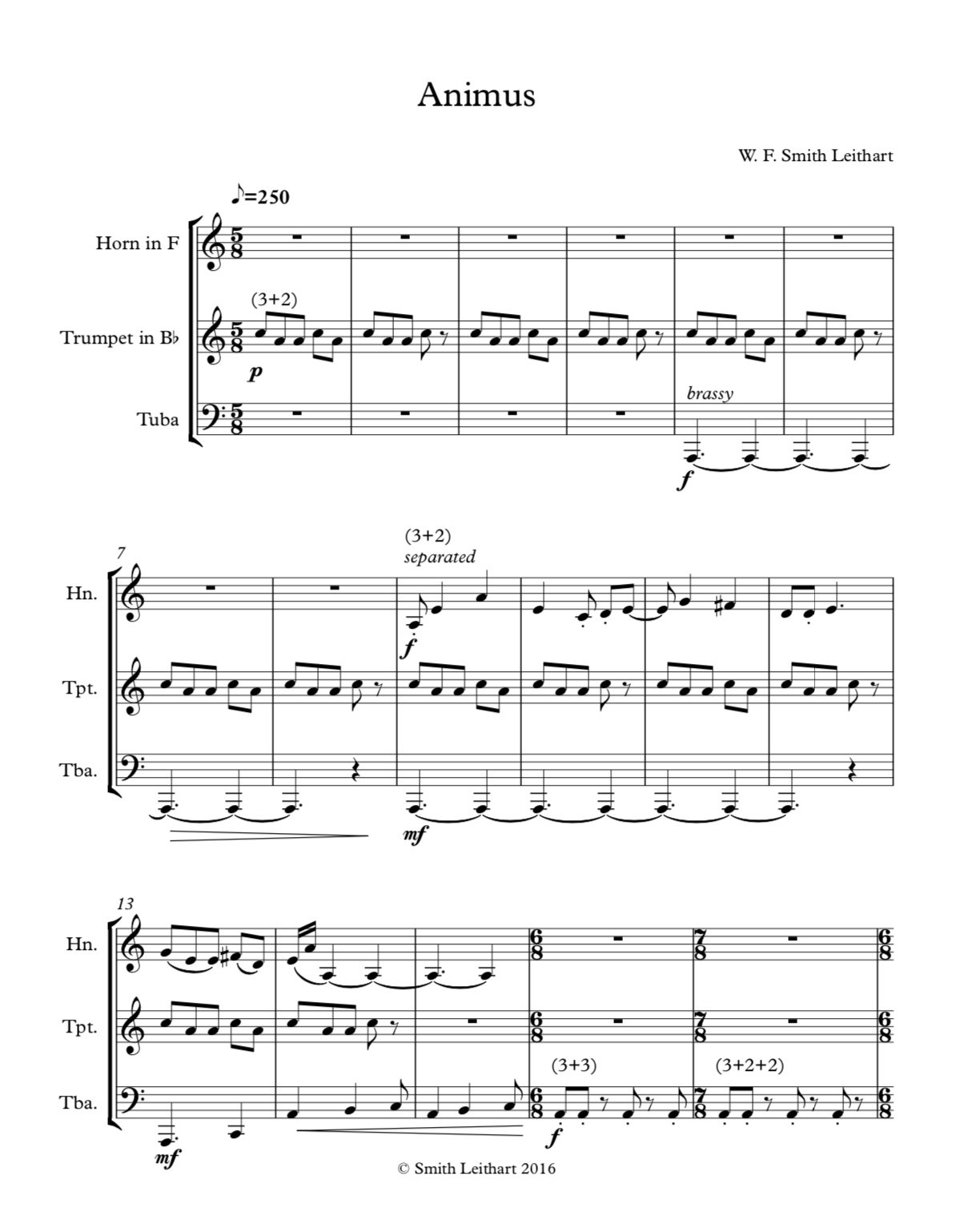
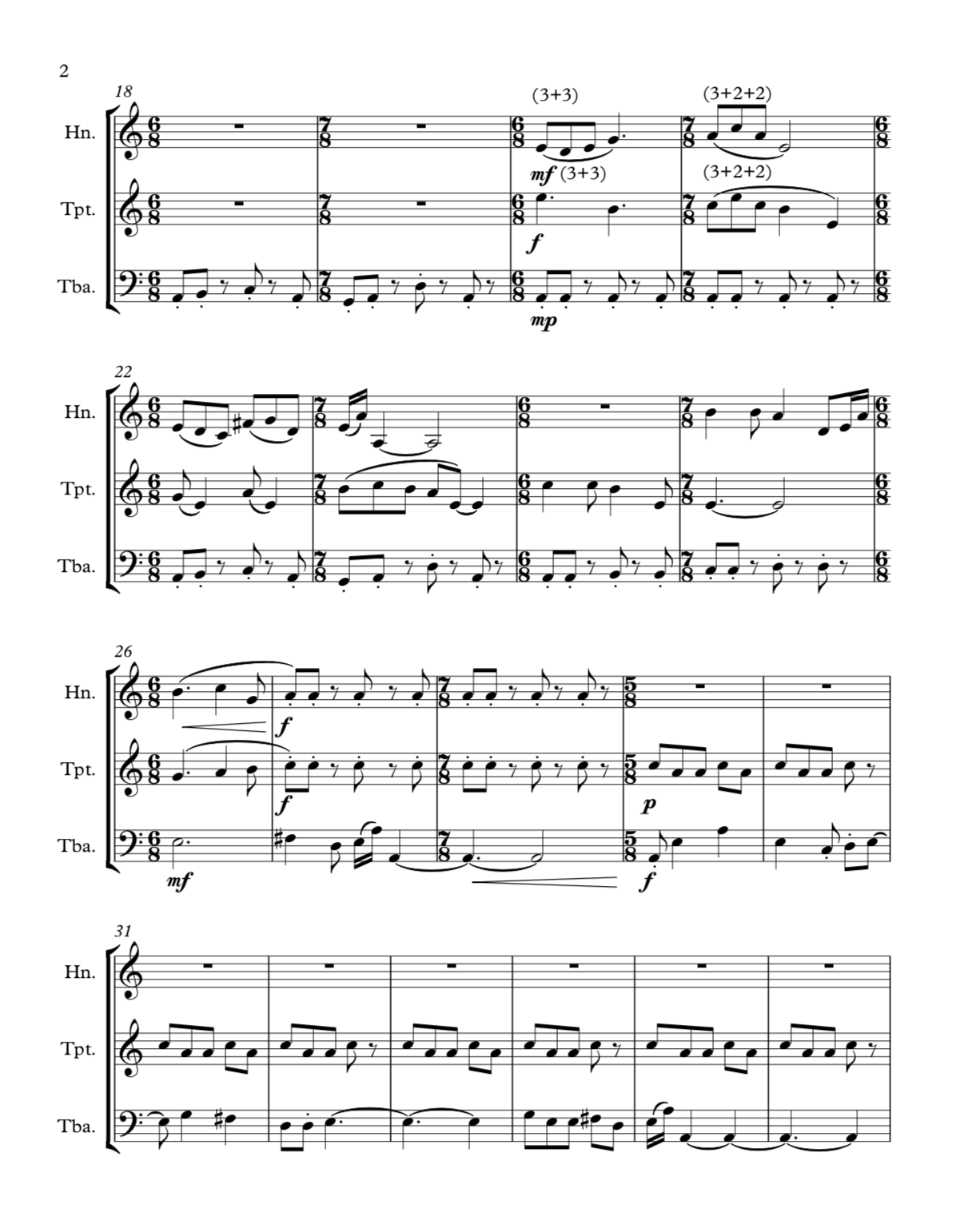
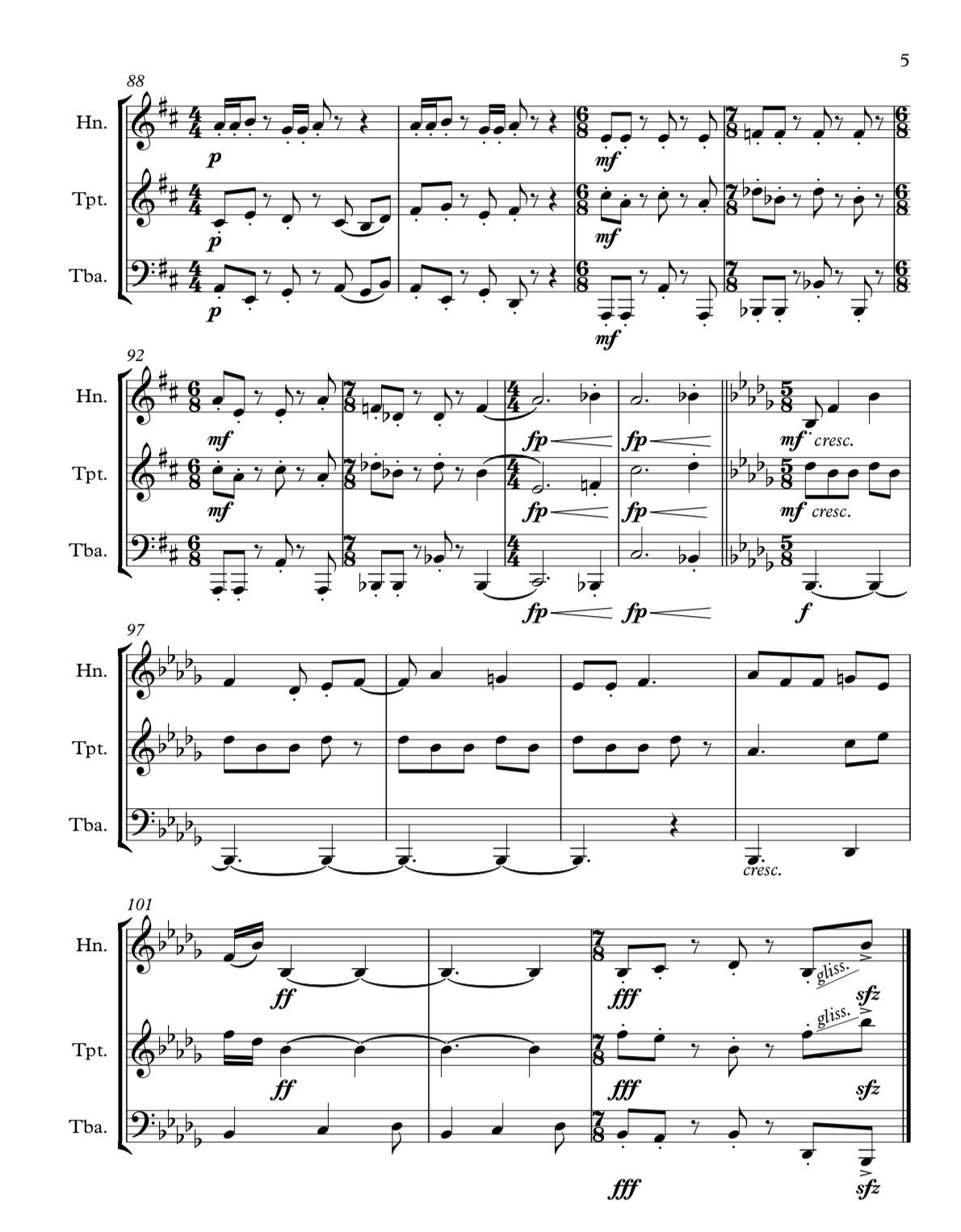
Animus utilizes multiple asymmetrical time signatures and a syncopated main theme to achieve a bold and headstrong atmosphere. The theme, first presented by the horn, is in the Dorian mode. The trumpet plays a repeated minor third that leads the listener to believe the piece is in minor, but the raised sixth in the theme debases that. All three instruments work together in counterpoint, passing the main theme around as well as other, secondary themes, and eventually building to a loud ending to the opening section.
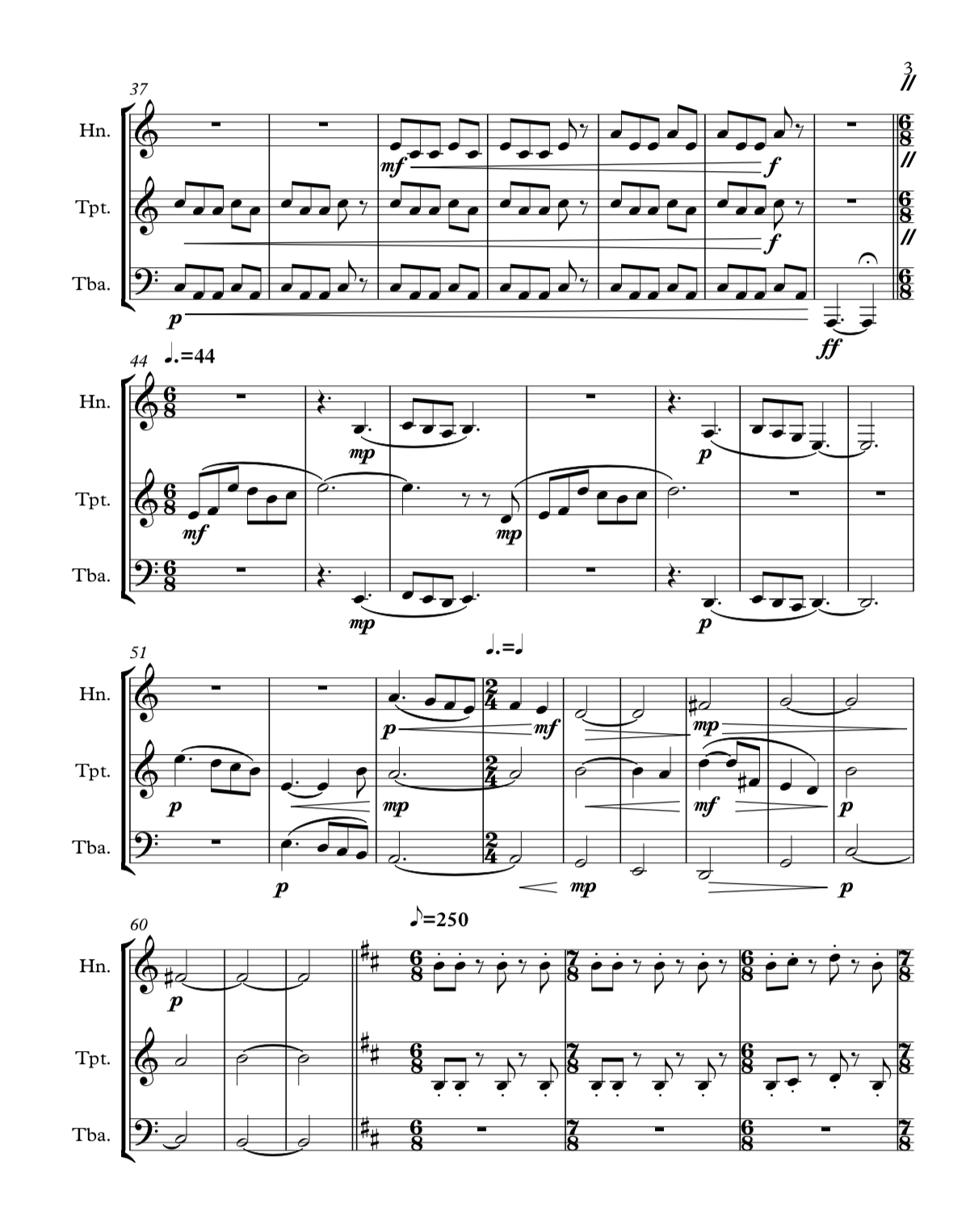
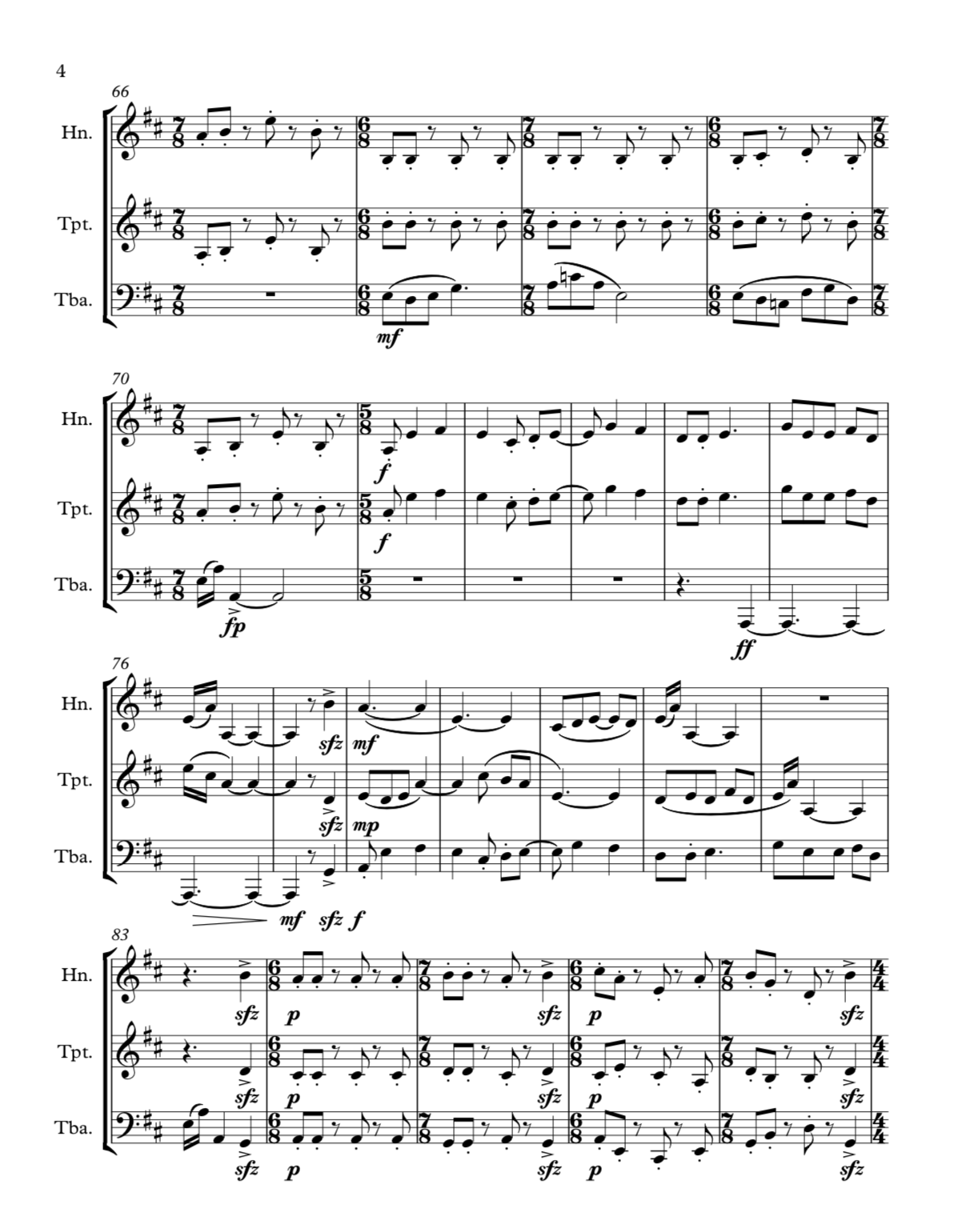
The B section begins much more slowly with the horn and tuba echoing the trumpet rhythmically, before the three meet in a chorale. The final section begins at the original tempo, and after a few measures, the trumpet and horn play the main theme in octaves, but this time, it is in Mixolydian, and the raised third gives a sense of triumph. The piece closes out with the horn playing the theme one last time, and the three instruments play together for a bold finish.
The title for this piece is meant to have the same ambiguity that the music itself does; both mysterious and victorious, confident and suspicious. Depending on context, “animus” can mean both “hostility or ill-feeling” and “motivation to do something.” I believe Animus succeeds in portraying both of these sentiments.
Below are notes from a couple of the performers. Sarah, Asher, and Brandon put a great deal of work into learning this music (in addition to being part of the brass ensemble on What is Man?), and I owe them a great debt of gratitude for the effort they put forth to achieve this performance.
from Sarah Derrick, horn:
I have always believed that having a personal connection with a composer can transform the identity of a work completely. For example, I have always struggled to appreciate atypical styles of music that I don’t gravitate towards naturally. Animus demanded I take on the challenge of knowing what the other performers are playing, while simultaneously executing my part to perfection — a standard idea in the world of music. However, the music of Smith Leithart is not that simple. It’s like a twisted puzzle of colors, appearing to clash but somehow fit together flawlessly in the end.
I have known Smith for four years now. We have attended classes together, confided in each other’s friendship, and had moments of brutal honesty. I am so proud of his growing confidence in this complex and vulnerable expression of his thoughts and experiences. Performing Animus gave me a greater insight into this expression, and I am thrilled to be a part of it.
from Asher Entrekin, trumpet:
Animus is one of the more intricate pieces I have performed. It has a lot going on, in spite of the fact that there are only three parts. The start from the trumpet begins the repeating refrain, starting quiet and building as the horn and tuba join. As the piece carries on, it builds further and further. Finally, it reaches a climax with a rumbling tuba note. Suddenly, with the transition to the trumpet solo, it feels much more calm and relaxed. If I’m being honest, the hardest part for me in the entire piece was the trumpet solo. The way it appears so suddenly and so delicately really helps put the mind elsewhere. Finally, it goes back to the main refrain. This piece was deceptively difficult, but beautifully done.
If you’d like to purchase the score and/or audio for Animus, please contact me for rates.